Business Analysis Becomes Faster
Every transaction is compiled automatically into complete financial reports — profit and loss, cash flow, balance sheet, and general ledger — accurate and ready to support decision-making.
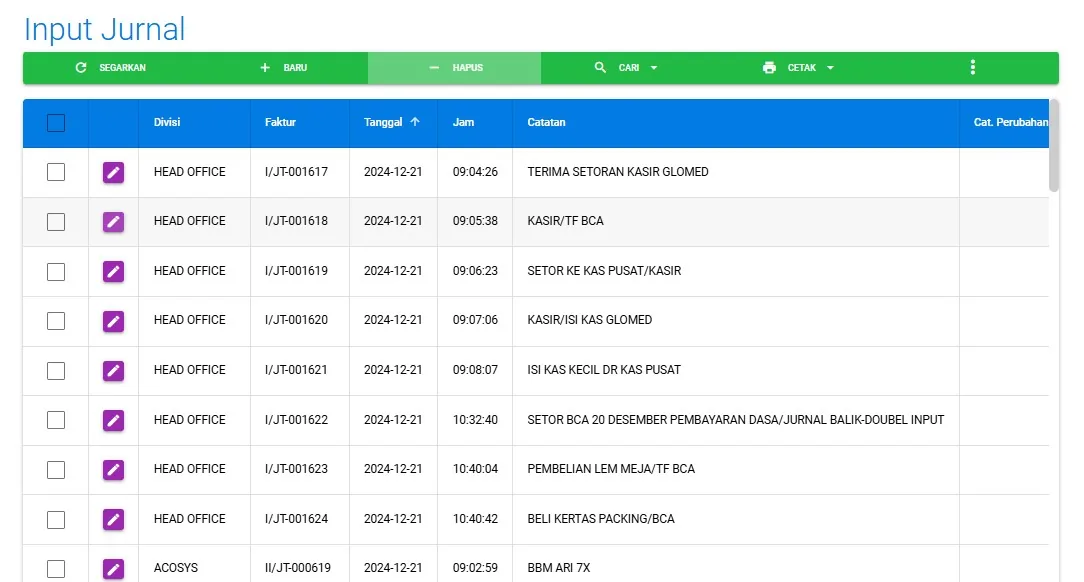
Journal Entry
Journal entry is the process of entering financial transaction data into journals, both the general journal and special journals — the first step of the accounting cycle and the one that determines the accuracy of financial reports. Correct journal entries ensure financial information is recorded properly and can be relied on for decision-making.
General Journal
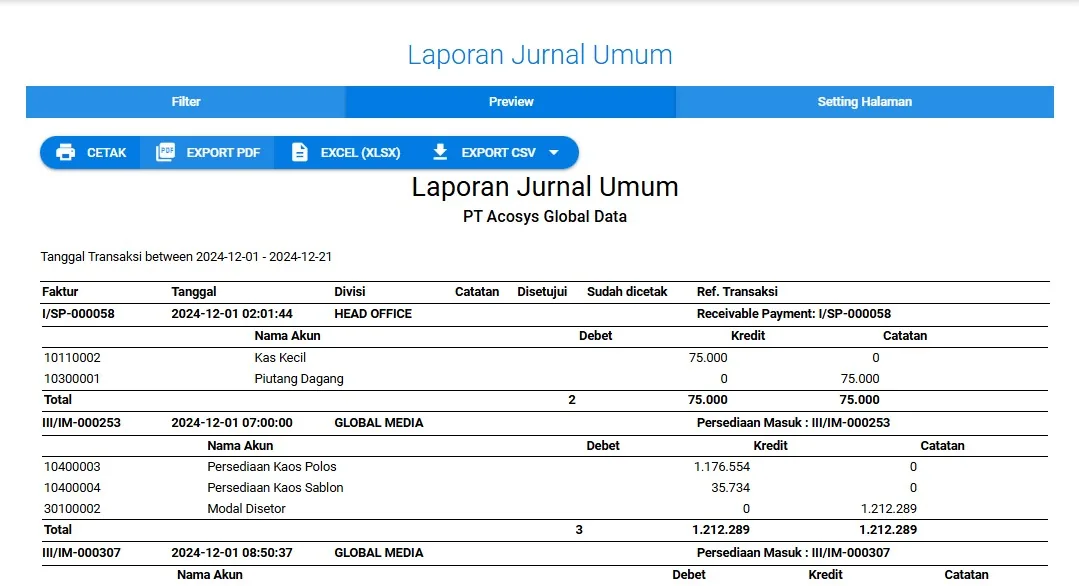
The general journal records every financial transaction chronologically — the date, the accounts affected, and the amounts — so every transaction is easy to identify and verify. Systematic recording before posting to the general ledger minimizes potential errors in the financial reports.
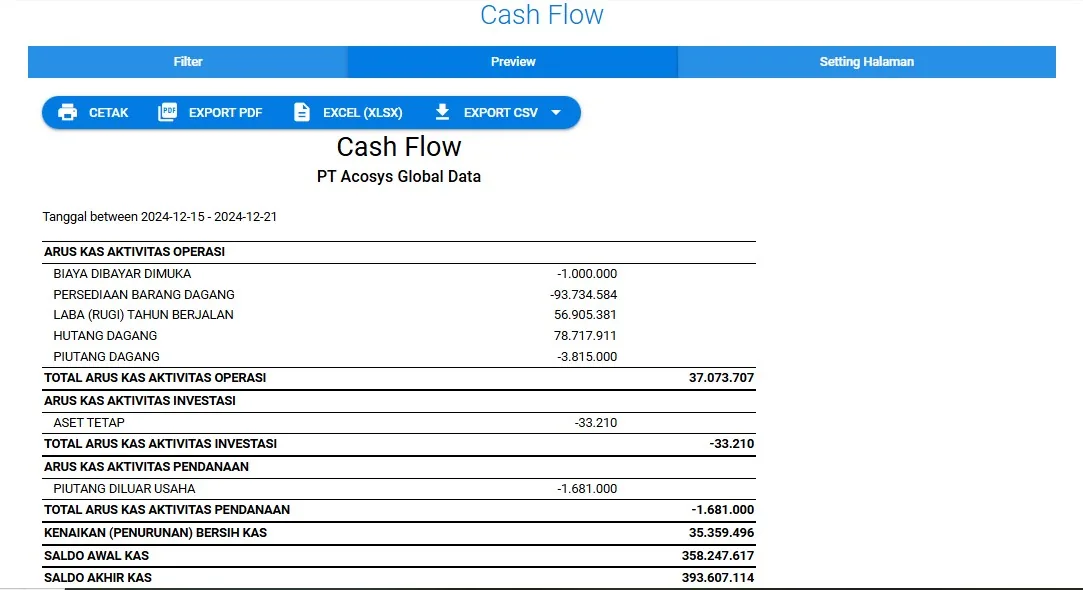
Cash Flow
Healthy cash flow ensures the company can pay its obligations on time — salaries, supplier bills, rent, and debts. Regular monitoring helps detect potential financial problems early, while cash flow information forms the basis for budgeting, revenue projections, and investment decisions such as buying assets or expanding the business.
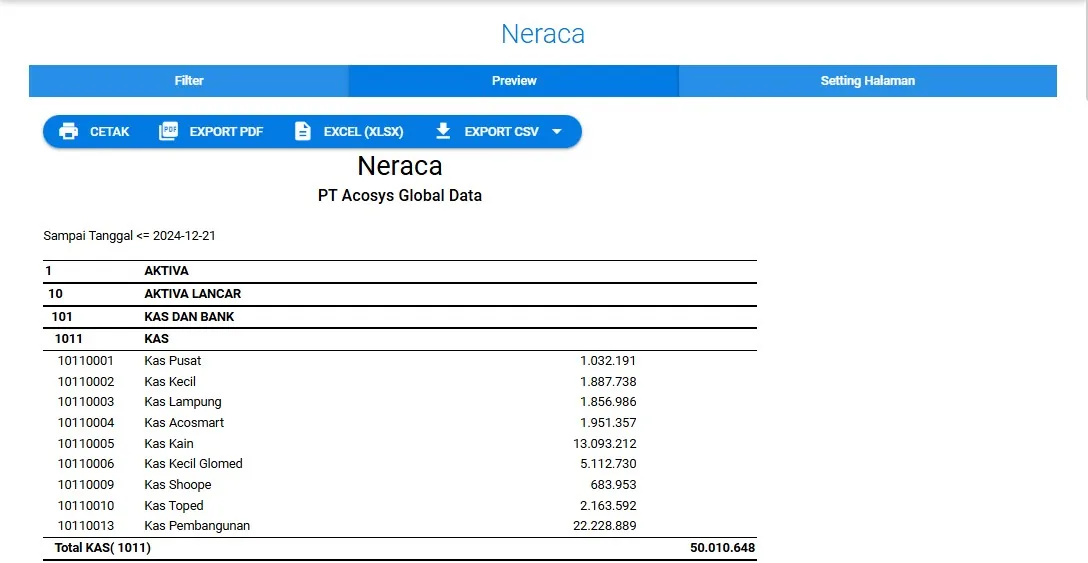
Balance Sheet
The balance sheet presents a "snapshot" of the financial position at a single point in time — the end of a month, quarter, or fiscal year. From the balance sheet, the company's capital structure is clear: the relationship between assets, liabilities, and equity. Investors generally use it to assess a company's financial health.
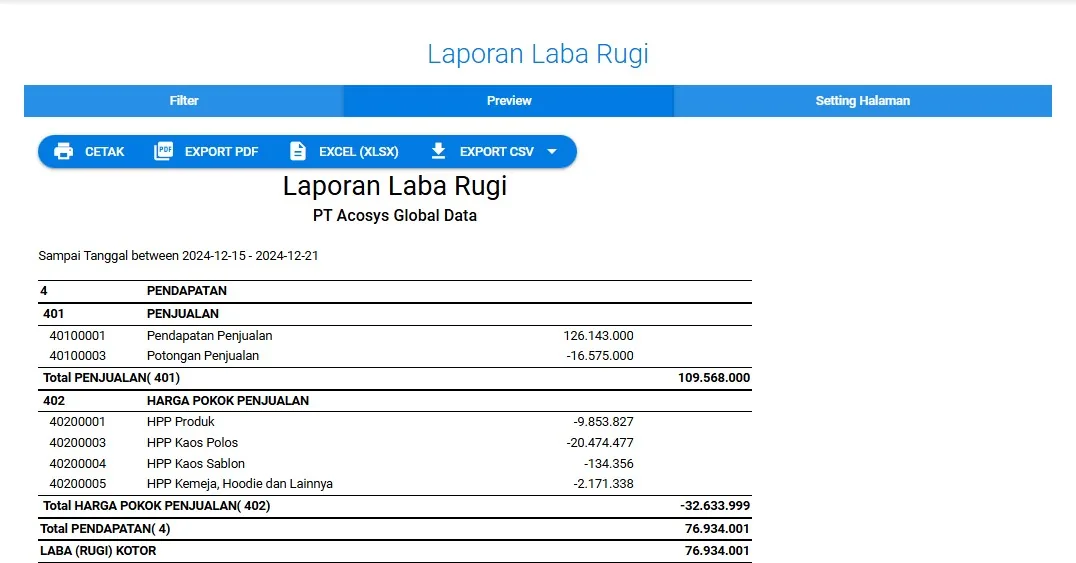
Profit and Loss
The profit and loss statement summarizes revenue, expenses, and the profit or loss over a given period. Revenue sources are broken down — product sales, services, or other — as are expense types such as operating, marketing, administrative, and financial costs, making the main revenue sources and the largest cost items easy to identify.
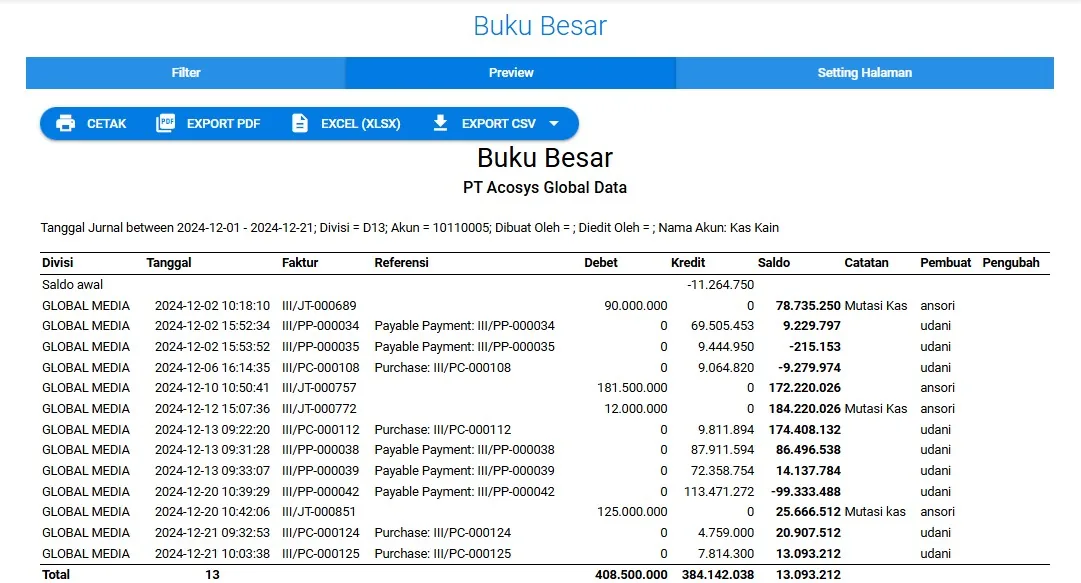
General Ledger
The general ledger summarizes all transactions from the journals and groups them into specific accounts, making it easy to see the changes and balance of each account. This classification provides essential information for preparing financial reports and making business decisions.
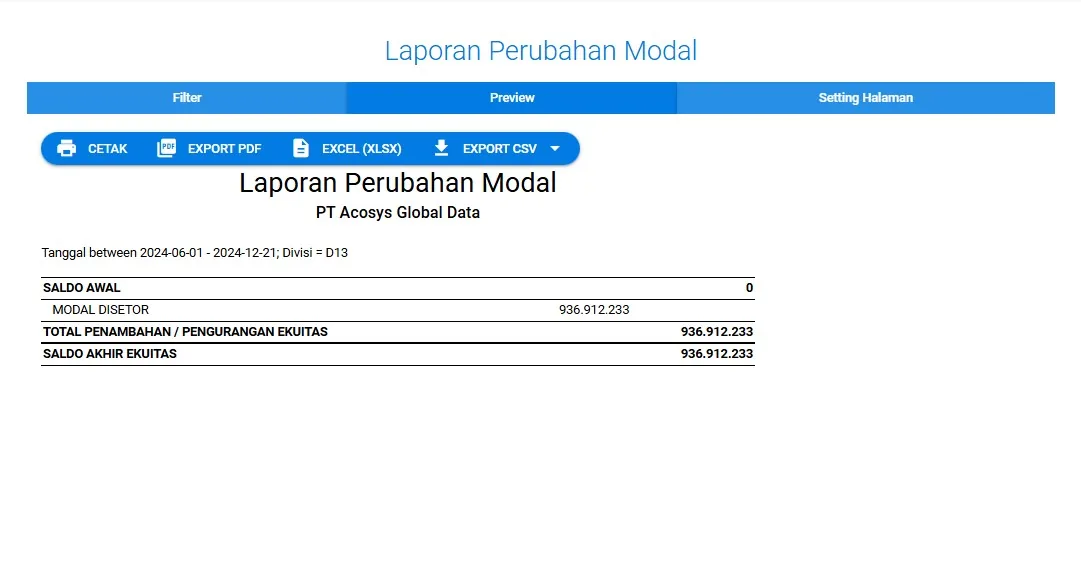
Changes in Equity
The statement of changes in equity (changes in capital) shows how the value of the company's ownership changed over a given period — from owner investments to retained earnings. This information is valuable for internal and external parties to evaluate performance, make decisions, and ensure transparency.
Asset Inventory
An asset register gives a clear picture of the company's wealth — current assets (cash, receivables, inventory) as well as fixed assets (land, buildings, machinery, vehicles). With asset records, the economic value of resources is known, the financial position can be assessed, and loss, theft, or misuse of assets can be prevented.
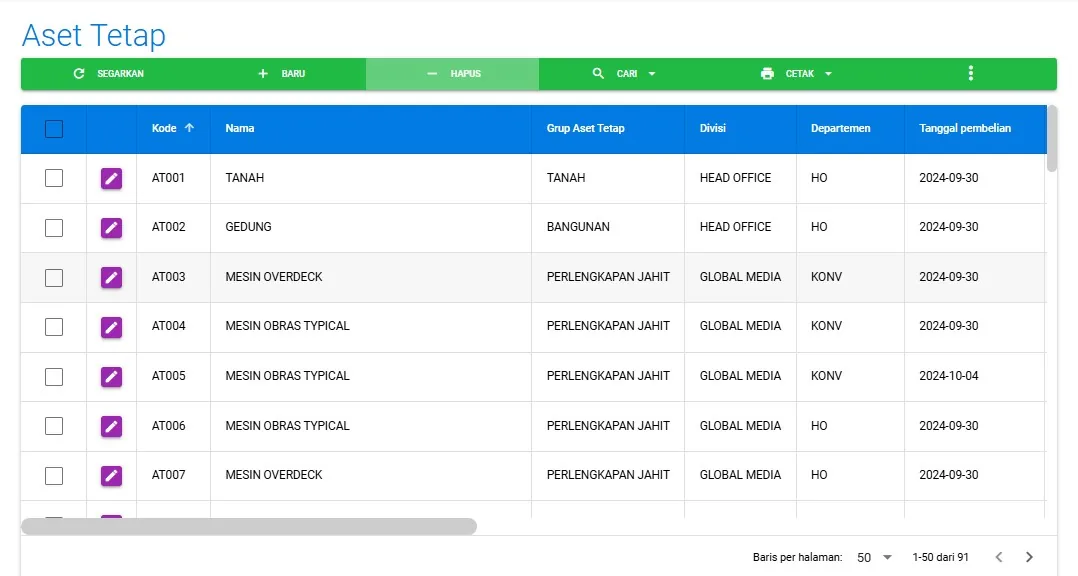
Fixed Asset Report
This report records the acquisition value of fixed assets, accumulated depreciation, and net book value — useful for scheduling maintenance to extend asset life and reduce unexpected repair costs. Accurate asset reports also increase the confidence of investors and creditors.
Financial Reports Without Overtime
The fastest way to understand Acosys is to try it yourself — free, with no installation needed.